
contractor hold harmless agreement pdf
Contractor Hold Harmless Agreement PDF: A Comprehensive Guide
This guide details contractor hold harmless agreements in PDF format‚ focusing on Massachusetts legal standards and enforceability. It ensures compliance with state regulations‚
mitigating risks for all parties involved in contractual arrangements.
What is a Contractor Hold Harmless Agreement?
A Contractor Hold Harmless Agreement‚ often found in PDF format‚ is a crucial legal document shifting potential liability from one party – typically the hiring party (Promisee) – to another‚ usually the contractor (Promisor). Essentially‚ it’s a risk transfer mechanism. This agreement stipulates that the contractor agrees to protect the hiring party from financial losses‚ claims‚ or lawsuits arising from the contractor’s work.
These agreements are common in construction‚ event planning‚ and various service industries. The Massachusetts versions‚ as highlighted in available templates‚ are carefully drafted to align with state laws‚ ensuring enforceability. The document clearly defines the “Parties” involved – the Promisor and Promisee – and outlines the scope of protection against potential damages or legal actions. It’s a proactive step in managing risk and clarifying responsibilities within a contractual relationship.
The Purpose of a Hold Harmless Agreement
The primary purpose of a Hold Harmless Agreement‚ often utilized in PDF contracts‚ is to allocate risk and protect one party from liability. It safeguards the hiring party (Promisee) from financial burdens stemming from the contractor’s (Promisor) actions or negligence during project execution. This is particularly vital in high-risk industries like construction‚ where accidents and damages are more frequent.
By signing such an agreement‚ the contractor assumes responsibility for potential claims‚ lawsuits‚ and associated costs – including legal fees. As seen in sample clauses from Law Insider‚ this extends to defending against claims. Massachusetts agreements are specifically designed to comply with state regulations‚ ensuring enforceability and clarity. Ultimately‚ it provides peace of mind and financial security for the party seeking services‚ mitigating potential losses.
Key Components of a Hold Harmless Agreement
A comprehensive Contractor Hold Harmless Agreement PDF typically includes several crucial components. Firstly‚ clear identification of both the Promisor (contractor) and Promisee (hiring party) is essential‚ as highlighted in Massachusetts form examples. Secondly‚ a detailed scope of work outlining the services provided is necessary. Thirdly‚ specific language defining the types of claims covered – property damage‚ bodily injury‚ negligence – must be present.
Furthermore‚ the agreement should address indemnification duties‚ outlining who bears the financial responsibility for losses. It also needs to specify any exclusions to coverage. DocHub’s editing tools facilitate customizing these elements. Finally‚ a governing law clause (like Massachusetts legal standards) and signature sections are vital for enforceability.

Understanding the Legal Language
Decoding terms like “indemnification” and “hold harmless” is crucial when reviewing a Contractor Hold Harmless Agreement PDF‚ ensuring clarity and legal protection for all parties.
Indemnification vs. Hold Harmless
While often used interchangeably‚ “indemnification” and “hold harmless” possess distinct legal nuances within a contractor agreement PDF. Indemnification represents a broader obligation to compensate for losses or damages‚ covering a wider range of potential liabilities. It’s a promise to make someone whole.
“Hold harmless‚” conversely‚ focuses specifically on protecting a party from liability – shielding them from claims or lawsuits. It’s a more direct assurance against being held responsible. A hold harmless clause often requires a party to defend another against claims‚ while indemnification typically addresses financial reimbursement after a loss occurs;
Understanding this difference is vital; a comprehensive agreement PDF may include both clauses‚ offering layered protection. Carefully review the specific wording to determine the extent of each party’s obligations and ensure clarity regarding potential financial and legal exposure.
Scope of Coverage: What Does it Protect Against?
A contractor hold harmless agreement PDF’s scope defines the types of claims covered. Typically‚ it protects against liabilities arising from the contractor’s work‚ including negligence‚ property damage‚ and bodily injury. However‚ coverage isn’t absolute. Agreements often specify whether they cover claims from third parties or those between the contracting parties themselves.
Crucially‚ the PDF should detail if it extends to defense costs – legal fees incurred in responding to claims. Some agreements limit coverage to “direct” damages‚ excluding consequential losses like lost profits. The extent of coverage hinges on the precise language; a broad clause offers greater protection than a narrow one.
Reviewing the PDF carefully is essential to understand exactly what risks are transferred and which remain with each party.
Common Exclusions in Hold Harmless Agreements
Hold harmless agreement PDFs frequently contain specific exclusions‚ limiting the scope of protection. Gross negligence or willful misconduct by the indemnifying party (the contractor) is almost universally excluded – they can’t be protected from their own intentional wrongdoing.
Another common exclusion involves claims stemming from the promisee’s (the hiring party’s) sole negligence. Agreements may also exclude liabilities arising from pre-existing conditions or hazards unrelated to the contractor’s work. Workers’ compensation claims are often specifically excluded‚ handled separately under state law.
Carefully scrutinizing the PDF for these exclusions is vital. Understanding what isn’t covered is as important as knowing what is‚ ensuring a realistic assessment of risk allocation.

Specific Clauses to Look For
Key clauses in contractor hold harmless agreement PDFs detail liability for negligence‚ property damage‚ and bodily injury‚ alongside workers’ compensation coverage stipulations.
Liability for Negligence
Determining liability for negligence within a contractor hold harmless agreement PDF is crucial. These agreements often specify whether one party assumes responsibility for the negligent acts of another. However‚ most jurisdictions‚ including Massachusetts‚ scrutinize clauses attempting to absolve a party from its own negligence.
Generally‚ a contractor cannot fully shield themselves from liability resulting from their own gross negligence or willful misconduct. The agreement should clearly define the scope of negligence covered‚ potentially differentiating between ordinary negligence and gross negligence. Carefully review clauses addressing defense and indemnification obligations arising from negligent acts‚ ensuring they align with applicable state laws and don’t attempt to unfairly shift responsibility for one’s own failings.
Liability for Property Damage
Contractor hold harmless agreement PDFs frequently address liability for property damage. These clauses outline which party bears the financial responsibility for damage to real or personal property occurring during the project. Typically‚ the contractor agrees to indemnify the property owner against losses stemming from their work‚ including damage caused by their employees or subcontractors.
However‚ the extent of this coverage is vital. Agreements should specify whether damage caused by pre-existing conditions or the owner’s negligence is included. Clear language defining “property damage” – encompassing both direct and consequential damages – is essential. Furthermore‚ limitations on liability‚ such as maximum payout amounts‚ should be explicitly stated within the PDF document to avoid future disputes.
Liability for Bodily Injury
Contractor hold harmless agreement PDFs must meticulously address liability for bodily injury. These clauses determine responsibility for injuries sustained by workers‚ clients‚ or third parties on the job site. Generally‚ contractors assume the burden of defending and indemnifying the property owner against claims arising from their negligence or that of their employees.
However‚ the scope of this protection is crucial. Agreements should clarify whether coverage extends to injuries caused by the owner’s actions or pre-existing hazardous conditions. Explicitly defining “bodily injury” and outlining insurance requirements are vital. Furthermore‚ specifying procedures for reporting incidents and managing claims within the PDF ensures a streamlined process and minimizes potential legal complications.
Workers’ Compensation Coverage
A contractor hold harmless agreement PDF must clearly delineate workers’ compensation responsibilities. Typically‚ contractors are required to maintain adequate workers’ compensation insurance for their employees‚ shielding the property owner from liability for workplace injuries. However‚ the agreement should specify who bears the cost of increased premiums resulting from the contractor’s claims history.
Crucially‚ the PDF should address scenarios involving subcontractors. Does the primary contractor’s coverage extend to their subs‚ or are they independently responsible for their own workers’ compensation? Clarifying these points prevents disputes and ensures all workers are adequately protected. Moreover‚ the agreement should outline procedures for verifying insurance coverage and addressing lapses in coverage‚ safeguarding the property owner’s interests.

State-Specific Considerations (Massachusetts Example)
Massachusetts hold harmless agreements require careful drafting to comply with legal standards‚ ensuring enforceability and adherence to state regulations for liability and risk mitigation.
Massachusetts Legal Standards for Hold Harmless Agreements
Massachusetts courts scrutinize hold harmless agreements‚ demanding clarity and fairness. Agreements must be unambiguous‚ specifically outlining the scope of indemnification and the types of claims covered. General release language is often insufficient; specificity is key. The “Promisor” – the party offering protection – and the “Promisee” – the party receiving it – must be clearly defined within the agreement itself.
Massachusetts law generally disfavors agreements that attempt to indemnify a party for its own sole negligence. However‚ indemnification for concurrent negligence (where both parties contribute to the harm) is often permissible‚ provided it’s explicitly stated. Compliance with Massachusetts General Laws is crucial‚ particularly those related to construction and liability. Agreements must be drafted to avoid violating public policy‚ and any limitations on liability should be conspicuous and understandable.
Promisor and Promisee Definitions
Within a Massachusetts Hold Harmless Agreement‚ precise definitions of “Promisor” and “Promisee” are fundamental. The Promisor is the party extending the protection – essentially‚ assuming the liability of another. This is typically the contractor or service provider. Conversely‚ the Promisee is the party receiving the protection‚ often the property owner or client engaging the contractor’s services.
Clear identification is vital; using full legal names and addresses for both parties avoids ambiguity. The agreement should explicitly state who is undertaking the obligation to indemnify and who is benefiting from that protection. Referring to these parties consistently throughout the document using these defined terms ensures clarity and strengthens enforceability under Massachusetts legal standards. Accurate definitions minimize disputes regarding responsibility and coverage.
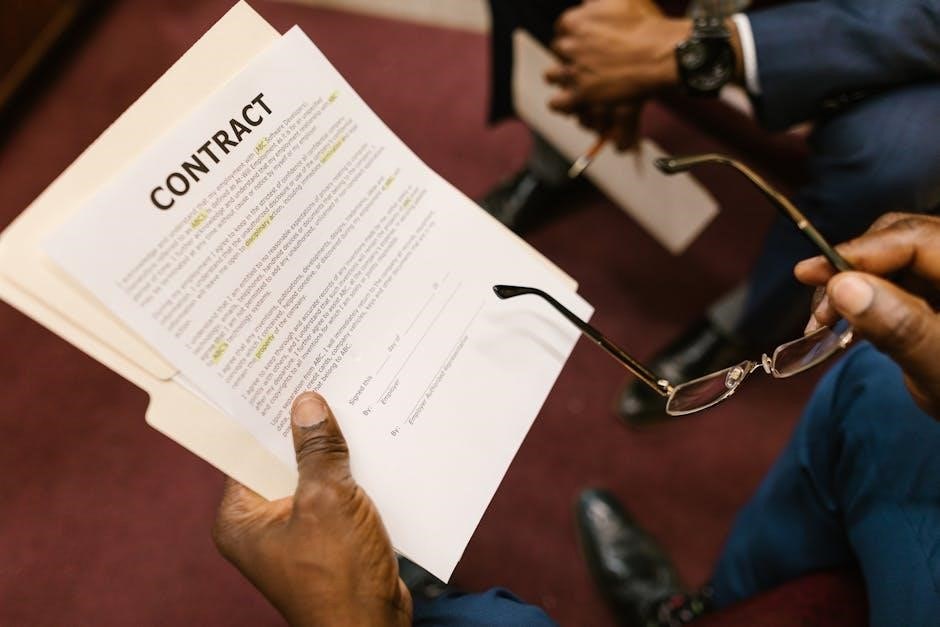
Enforceability in Massachusetts
Massachusetts courts scrutinize Hold Harmless Agreements‚ ensuring they are not overly broad or against public policy. Agreements must be clear‚ conspicuous‚ and unambiguous to be enforceable. Specifically‚ provisions attempting to indemnify a party for their own sole negligence are generally void. However‚ indemnification for contributory negligence is often permissible.
Compliance with Massachusetts legal standards is crucial. The agreement’s language must precisely define the scope of coverage and limitations. Properly drafted agreements‚ reflecting a reasonable allocation of risk‚ are more likely to withstand legal challenges. Ambiguity will be construed against the drafting party. Seeking legal counsel to review the agreement before signing is highly recommended to ensure enforceability.

Practical Applications & Scenarios
Hold harmless agreements are vital in construction‚ subcontractor deals‚ and event planning. PDF formats streamline these processes‚ clearly defining liability and risk allocation for all parties.
Construction Projects
Construction projects inherently involve numerous risks‚ making hold harmless agreements crucial. These agreements‚ often in PDF format‚ protect general contractors from liability stemming from subcontractor actions. They clarify responsibility for property damage‚ bodily injury‚ and negligence during construction.
Specifically‚ a contractor might require a subcontractor to indemnify them against claims arising from the subcontractor’s work. This includes potential lawsuits filed by third parties due to accidents or defects. The PDF document should meticulously outline the scope of coverage‚ detailing what events trigger the hold harmless clause. Properly drafted agreements ensure clear understanding and enforceability‚ minimizing disputes and legal challenges. Digital signatures via platforms like DocHub enhance efficiency and security in managing these vital documents.
Subcontractor Agreements
Within subcontractor agreements‚ hold harmless clauses‚ frequently delivered as a PDF‚ are paramount for risk allocation. These provisions safeguard the primary contractor from liabilities originating from the subcontractor’s performance. The agreement should clearly define the extent of indemnification‚ covering potential claims related to negligence‚ property damage‚ or bodily injury.
A well-structured PDF will specify the duties to defend‚ arising immediately upon claim notification‚ as seen in legal precedents. It’s vital to address gross negligence or willful acts by the subcontractor. Utilizing platforms like DocHub for editing and digital signatures streamlines the process. Careful review ensures the subcontractor assumes appropriate responsibility‚ protecting the contractor’s assets and legal standing throughout the project’s duration.
Event Planning & Services
For event planning and service contracts‚ a contractor hold harmless agreement‚ often in PDF format‚ is crucial for managing inherent risks. These agreements protect event organizers from liabilities stemming from vendor actions‚ attendee injuries‚ or property damage during the event. The PDF document should meticulously outline the scope of coverage‚ specifying what incidents the vendor will indemnify against.
Clear language is essential‚ defining responsibilities for negligence and potential legal claims. Digital signature capabilities‚ via platforms like DocHub‚ enhance efficiency and enforceability. Massachusetts legal standards require careful drafting to ensure the agreement is valid and protects all parties. Thorough review before signing is vital‚ safeguarding the event organizer from unforeseen financial and legal burdens.

PDF Format & Digital Signatures
PDFs offer secure‚ standardized distribution of hold harmless agreements. DocHub facilitates easy editing and filling‚ while digital signatures provide legality and streamline the contracting process.
Benefits of Using a PDF Format
PDFs (Portable Document Format) are ideal for contractor hold harmless agreements due to their universal accessibility and preservation of formatting across different devices and operating systems. This ensures all parties view the agreement identically‚ minimizing misunderstandings. PDFs enhance security‚ preventing unauthorized alterations to the crucial terms.

Furthermore‚ PDFs facilitate easy distribution via email or online platforms. They are also relatively compact in file size‚ simplifying storage and sharing. Tools like DocHub allow for streamlined editing and completion‚ including adding text‚ images‚ and fillable fields. The format’s inherent stability ensures the agreement remains consistent throughout its lifecycle‚ providing a reliable record of the agreed-upon terms and conditions.
Using DocHub for Editing and Filling
DocHub provides a user-friendly platform for modifying and completing contractor hold harmless agreement PDFs. Its intuitive interface allows users to easily insert and customize text‚ add images‚ and create fillable areas for signatures and data. Unnecessary details can be efficiently whiteouted‚ while crucial sections can be highlighted for emphasis.
DocHub streamlines the process of adding legally binding electronic signatures‚ ensuring compliance and validity. The platform supports collaborative editing‚ enabling multiple parties to review and contribute to the document. Its robust features enhance accuracy and reduce errors‚ ultimately simplifying the management of these important legal agreements. DocHub offers a secure and efficient solution for handling PDF documents.
Legality of Digital Signatures
Digital signatures on contractor hold harmless agreement PDFs are generally legally binding‚ mirroring the validity of traditional handwritten signatures. Electronic signatures are governed by the Uniform Electronic Transactions Act (UETA) and the Electronic Signatures in Global and National Commerce (ESIGN) Act‚ providing a legal framework for their acceptance.
However‚ specific state laws may impose additional requirements. Platforms like DocHub employ secure encryption and audit trails‚ bolstering the authenticity and non-repudiation of digital signatures. Ensuring compliance with relevant regulations is crucial for enforceability. Proper documentation and adherence to platform guidelines further strengthen the legal standing of digitally signed agreements‚ offering peace of mind to all involved parties.

Negotiating a Hold Harmless Agreement
Carefully review clauses‚ watch for red flags like overly broad indemnification‚ and seek legal counsel to ensure fair terms within the PDF agreement.
What to Negotiate
When reviewing a contractor hold harmless agreement PDF‚ several key areas demand careful negotiation. Specifically‚ the scope of indemnification should be narrowed to only cover liabilities directly resulting from the contractor’s actions or negligence. Avoid agreements requiring indemnity for the other party’s sole negligence.
Furthermore‚ clearly define the types of claims covered‚ excluding those arising from the promisee’s inherent risks or pre-existing conditions. Negotiate limitations on liability‚ such as capping the indemnification amount. Also‚ ensure the agreement includes a mutual defense and indemnification clause‚ requiring both parties to cooperate in defending against claims. Finally‚ scrutinize any clauses related to attorney’s fees‚ seeking to limit your exposure to such costs.
Red Flags to Watch Out For
Reviewing a contractor hold harmless agreement PDF requires vigilance for problematic clauses. Be wary of overly broad indemnification language‚ extending beyond the contractor’s direct negligence. Agreements demanding coverage for the promisee’s sole negligence are significant red flags‚ shifting undue risk.
Pay close attention to clauses waiving subrogation rights‚ potentially hindering insurance recovery. Also‚ scrutinize provisions requiring defense of claims even if liability isn’t established. Unclear definitions of key terms like “claim” or “loss” can create ambiguity. Finally‚ be cautious of agreements lacking reciprocal obligations‚ placing all the burden on the contractor. Seek legal counsel if you encounter any of these warning signs.
Seeking Legal Counsel
Navigating contractor hold harmless agreement PDFs can be complex‚ especially concerning Massachusetts legal standards. Engaging an attorney ensures the agreement adequately protects your interests and complies with state regulations. Legal counsel can clarify ambiguous language‚ assess the scope of indemnification‚ and identify potential risks.
An attorney will review the agreement’s enforceability‚ considering recent changes in indemnification laws and relevant case law. They can advise on necessary negotiations to achieve a fair balance of risk allocation. Don’t hesitate to seek expert guidance before signing‚ particularly with broad or unusual clauses. Proactive legal review minimizes potential liabilities and safeguards your business.

Recent Updates & Trends (as of 04/16/2026)
Recent shifts in indemnification laws and evolving case law significantly impact hold harmless agreements. Staying informed about these changes is crucial for enforceable PDFs.
Changes in Indemnification Laws
As of April 16‚ 2026‚ several jurisdictions are witnessing modifications to indemnification laws‚ directly influencing contractor hold harmless agreements. These changes often center around clarifying the scope of liability‚ particularly concerning gross negligence or willful misconduct. Courts are increasingly scrutinizing broad indemnification clauses‚ seeking to ensure fairness and prevent one party from assuming all risks.
Specifically‚ there’s a trend towards limiting indemnification for a party’s own negligence‚ even if contractually agreed upon. This impacts PDF templates‚ requiring careful drafting to comply with current legal interpretations. Updates also address the allocation of defense costs‚ with some states imposing limitations on who bears these expenses. Understanding these nuances is vital when creating or reviewing hold harmless agreements in PDF format‚ ensuring enforceability and minimizing potential disputes.
Impact of Case Law
Recent court decisions significantly shape the interpretation and enforceability of contractor hold harmless agreements‚ particularly those in PDF format; Case law clarifies the boundaries of indemnification‚ often focusing on the principle of “reasonable risk allocation.” For example‚ rulings emphasize that indemnification clauses shouldn’t shield a party from its own reckless or intentional acts.
The Law Insider sample clauses demonstrate how courts assess proximate cause – a critical element in determining liability. Judgments increasingly favor a narrow reading of indemnification provisions‚ especially when ambiguity exists. This necessitates precise language in PDF agreements‚ avoiding overly broad or vague terms. Staying abreast of these legal precedents is crucial for drafting enforceable hold harmless agreements and mitigating potential legal challenges.
Future Outlook for Hold Harmless Agreements
The future of contractor hold harmless agreements‚ especially in PDF format‚ points towards increased scrutiny and standardization. Expect a continued emphasis on clear‚ concise language‚ minimizing ambiguity to withstand legal challenges. Digital signatures and DocHub’s editing capabilities will become even more prevalent‚ streamlining agreement processes.
As indemnification laws evolve‚ agreements will likely require more specific definitions of covered risks and exclusions. Massachusetts legal standards will continue to influence drafting practices‚ demanding compliance with state regulations. Proactive risk management and legal counsel will be essential for navigating this evolving landscape‚ ensuring PDF agreements remain enforceable and protect all parties effectively.