
guide e
Understanding E-Bikes: A Comprehensive Guide

Navigating the world of electric bikes can be daunting‚ with motors‚ batteries‚ and regulations all vying for attention. This comprehensive guide
will cut through the noise‚
offering essential insights into this exciting technology and the benefits of motor-assisted cycling.
What is an E-Bike?
An electric bike‚ or e-bike‚ is a bicycle with an integrated electric motor used to assist with propulsion. Unlike a motorcycle‚ e-bikes require the rider to pedal‚ with the motor providing varying levels of assistance. This assistance makes cycling easier‚ faster‚ and more accessible‚ especially for those tackling hills or longer distances.
Essentially‚ e-bikes bridge the gap between traditional bicycles and motorcycles‚ offering a unique riding experience. They are becoming increasingly popular as a sustainable and efficient mode of transportation‚ recreation‚ and fitness. Understanding the core components and classes is crucial before diving into the world of e-bikes‚ ensuring you select the right model for your needs. From commuting to trail riding‚ there’s an e-bike designed for every lifestyle.
E-Bike Classes: Knowing Your Options
E-bikes are categorized into three main classes‚ each defined by its motor’s power output and assistance method. Class 1 e-bikes offer pedal assist only‚ with the motor providing assistance only when the rider is pedaling‚ up to a maximum speed of 20 mph. Class 2 e-bikes include a throttle‚ allowing riders to propel the bike without pedaling‚ also capped at 20 mph. Finally‚ Class 3 e-bikes offer pedal assist up to 28 mph‚ and may or may not include a throttle.
Understanding these classifications is vital‚ as they often dictate where you can legally ride your e-bike. Regulations vary by state and locality‚ so knowing your e-bike’s class ensures compliance. Choosing the right class depends on your riding style and intended use – a throttle for convenience‚ or pedal assist for a more traditional cycling feel.
Benefits of Riding an E-Bike
E-bikes offer a wealth of advantages‚ extending the joy of cycling to a wider range of individuals. They make commuting easier‚ allowing you to arrive at your destination feeling refreshed and avoiding traffic congestion. Hills become less daunting‚ and longer distances are achievable with less effort‚ opening up new routes and possibilities.
Beyond convenience‚ e-bikes promote a healthier lifestyle‚ encouraging physical activity without the strain of traditional cycling. They’re also an environmentally friendly transportation option‚ reducing your carbon footprint. Whether you’re seeking a practical commute‚ a fun recreational activity‚ or a sustainable mode of transport‚ an e-bike delivers a compelling solution.

Key Components of an E-Bike
Understanding the core elements – motors‚ batteries‚ and brakes – is crucial for informed decision-making. These components define performance‚ range‚ and safety features.
Motors: Types and Specifications
E-bike motors primarily fall into three categories: hub motors‚ mid-drive motors‚ and friction drive motors. Hub motors‚ as the name suggests‚ are integrated into the wheel hub – either front or rear – offering simplicity and affordability. Mid-drive motors‚ positioned at the pedals‚ provide a more natural riding experience and superior weight distribution‚ enhancing handling and climbing ability.
Specifications to consider include wattage and torque. Wattage indicates the motor’s power output‚ influencing speed and acceleration. Higher wattage generally equates to more power‚ but also potentially reduced range. Torque‚ measured in Newton-meters (Nm)‚ determines the motor’s ability to overcome resistance‚ crucial for hills and headwinds. Common wattage ranges are 250W‚ 350W‚ 500W‚ and 750W‚ with torque varying accordingly. Understanding these specifications is vital for matching a motor to your riding style and terrain.
Batteries: Range‚ Voltage‚ and Capacity
E-bike batteries are typically lithium-ion‚ prized for their energy density and relatively lightweight nature. Battery range‚ a key consideration for buyers‚ is influenced by several factors including battery capacity‚ motor wattage‚ rider weight‚ terrain‚ and assist level. Higher capacity (measured in Watt-hours – Wh) translates to longer range‚ but also increases battery size and weight.

Voltage impacts the motor’s performance; higher voltage generally allows for more power and efficiency. Common voltages are 36V‚ 48V‚ and 52V. Capacity typically ranges from 300Wh to 750Wh or more. It’s crucial to balance capacity and voltage to meet your riding needs. Remember that advertised range is often optimistic; real-world range will likely be lower.
Brakes: Hydraulic vs. Mechanical
E-bikes‚ due to their increased speed and weight‚ demand reliable braking systems. Two primary types dominate the market: hydraulic and mechanical disc brakes. Hydraulic brakes utilize fluid to transmit force from the lever to the caliper‚ offering superior stopping power and modulation – meaning finer control over braking force. They require less hand effort and perform consistently in all weather conditions.
Mechanical disc brakes use a cable to actuate the caliper. They are generally more affordable and easier to maintain‚ but typically lack the power and finesse of hydraulic systems. While adequate for many riders‚ they may struggle with steep descents or heavier loads. Consider your riding style and terrain when choosing between these options.
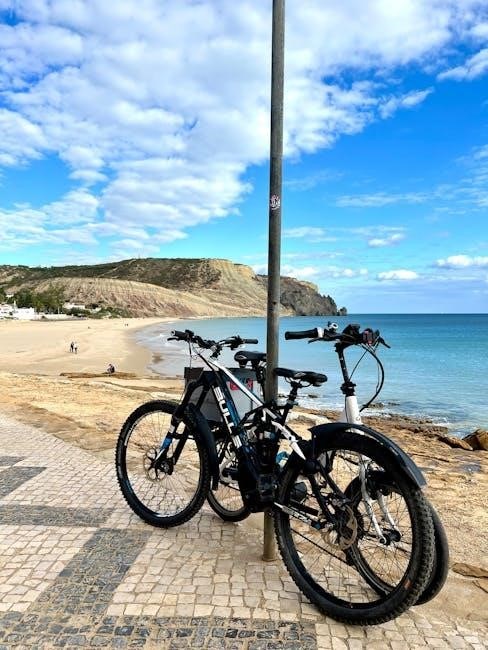
Choosing the Right E-Bike for You
Selecting the ideal e-bike hinges on your needs. Consider commuting‚ mountain trails‚ or budget constraints; matching a bike to your routes is crucial for enjoyment.
Commuting E-Bikes: Features and Considerations
For daily commutes‚ an e-bike transforms travel‚ offering a blend of efficiency and ease. Key features include comfortable geometry for upright riding‚ integrated lights for visibility‚ and often‚ rack and fender mounts for practicality. Consider the distance and terrain of your commute; longer distances necessitate larger battery capacities for extended range.
Pay attention to the class of e-bike‚ as regulations vary. Class 1 and 3 are common for commuting‚ offering pedal assist up to 20 or 28 mph respectively. However‚ be mindful of potential proprietary parts‚ especially in lower price ranges (under $1000)‚ where unique components like derailleur hangers can be difficult or impossible to replace. Prioritize serviceability to avoid costly repairs down the line. A reliable braking system is also paramount for safety in urban environments.
Mountain E-Bikes: Tackling Trails with Power
Mountain e-bikes (eMTBs) revolutionize off-road cycling‚ providing assistance to conquer challenging terrain. Look for models with robust suspension systems – front suspension is standard‚ while full suspension offers enhanced comfort and control. Powerful motors and high-capacity batteries are crucial for navigating steep climbs and maintaining speed on technical trails.
Consider the motor’s torque output‚ as this directly impacts climbing ability. Durable brakes‚ often hydraulic disc brakes‚ are essential for confident descents. Tire choice is also vital; wider tires with aggressive tread patterns provide better traction. As with commuting e-bikes‚ be aware of potential proprietary parts‚ particularly in budget-friendly options‚ which could limit repair options. Prioritize a bike that matches your riding style and trail difficulty.
Budget E-Bikes: Finding Value Under $1000
Finding a quality e-bike under $1000 requires careful consideration. While affordable options exist‚ compromises are often made in component quality. Be particularly cautious of “bike-shaped-objects” featuring unique‚ irreplaceable parts like derailleur hangers. Serviceability can be a significant issue‚ potentially leading to costly repairs or replacements.
Focus on essential features: a reliable motor‚ adequate battery range for your needs‚ and functional brakes. Don’t expect top-of-the-line components at this price point. Research brands known for value and read reviews carefully. Prioritize a bike from a reputable dealer offering support and warranty coverage. Remember‚ a slightly higher investment can often yield a more durable and serviceable e-bike in the long run.

E-Bike Maintenance and Serviceability
Regular maintenance is crucial for e-bike longevity. However‚ proprietary parts can complicate repairs‚ increasing costs and limiting DIY options; careful research is vital.
Proprietary Parts: What to Watch Out For
One significant concern when purchasing an e-bike‚ particularly in the under $1000 price range‚ is the prevalence of proprietary parts. While seemingly a minor detail‚ this can dramatically impact long-term serviceability and repair costs. Many budget-friendly e-bikes utilize unique components – such as derailleurs‚ hangers‚ or even battery connectors – that are specific to that manufacturer and not readily available through standard bicycle retailers.

This means that if a part fails‚ you may be forced to order directly from the manufacturer‚ facing potential delays and inflated prices. Standard bicycle parts are easily replaceable‚ offering convenience and cost-effectiveness. Be wary of “bike-shaped-objects”; thoroughly research component compatibility before committing to a purchase. Understanding which parts are standard versus proprietary is key to avoiding future headaches and ensuring your e-bike remains rideable for years to come.
Basic Maintenance Tasks You Can Do Yourself
Maintaining your e-bike doesn’t require a professional mechanic for every issue. Several routine tasks can be easily handled at home‚ saving you time and money. Regularly checking tire pressure is crucial for optimal performance and battery efficiency. Cleaning and lubricating the chain extends its lifespan and ensures smooth shifting. Inspecting brake pads for wear and tear is vital for safety‚ and adjusting them as needed is straightforward.
Furthermore‚ keeping the battery clean and stored properly (avoiding extreme temperatures) maximizes its capacity and longevity. Learning these basic skills empowers you to proactively care for your investment and address minor issues before they escalate. Remember to consult your e-bike’s manual for specific recommendations and safety precautions.

Legal Considerations and Regulations
E-bike laws vary significantly by state‚ impacting where and how you can ride. Understanding these regulations‚ alongside prioritizing safety gear‚ is essential for responsible e-biking.
E-Bike Laws: A State-by-State Overview
Navigating e-bike legality requires acknowledging the patchwork of regulations across the United States. States classify e-bikes into different classes – typically based on motor power and assisted speed – which then dictate where they’re permitted. Some states fully embrace e-bikes‚ treating them similarly to traditional bicycles with access to bike lanes and trails.
However‚ others impose restrictions‚ such as limiting e-bike access to roads with speed limits under a certain threshold‚ or prohibiting them on certain types of trails. It’s crucial to research the specific laws in your state and any local ordinances‚ as cities and counties may have additional rules. Resources like PeopleForBikes offer detailed state-by-state e-bike law maps‚ providing a valuable starting point for understanding your rights and responsibilities as an e-bike rider. Staying informed ensures a safe and legal riding experience.
Safety Gear and Best Practices
Prioritizing safety is paramount when enjoying the benefits of an e-bike. While offering assistance‚ these bikes still require rider awareness and appropriate gear. A properly fitted helmet is non-negotiable‚ protecting against head injuries in case of a fall. Consider bright clothing and lights – front white and rear red – to enhance visibility‚ especially during low-light conditions.
Beyond gear‚ adopt safe riding practices. Be mindful of your increased speed and braking distance compared to traditional bikes; Scan your surroundings‚ anticipate potential hazards‚ and signal your intentions clearly. Familiarize yourself with local traffic laws and bike lane etiquette. Regular bike maintenance‚ including brake checks‚ is also crucial. Responsible riding ensures both your safety and the safety of others on the road.

The Future of E-Bikes
Emerging technologies and trends are rapidly shaping the e-bike landscape‚ promising enhanced performance‚ connectivity‚ and affordability for all riders in the coming years.
Emerging Technologies and Trends
The e-bike world is experiencing a surge of innovation‚ with several key technologies poised to redefine the riding experience. We’re seeing advancements in battery technology‚ specifically focusing on increased energy density for longer ranges and faster charging times. Solid-state batteries are a particularly exciting prospect.
Connectivity is also becoming increasingly important‚ with integrated GPS tracking‚ smart lock features‚ and over-the-air software updates becoming more common. Expect to see more sophisticated motor control algorithms that optimize power delivery and efficiency. Furthermore‚ developments in lightweight materials‚ like carbon fiber‚ are reducing bike weight‚ enhancing performance.
Integration of AI and machine learning could personalize the riding experience‚ adjusting assistance levels based on rider input and terrain. Finally‚ subscription models for e-bikes and batteries are emerging‚ potentially lowering the barrier to entry for new riders.
E-Bike Price Spectrum: What to Expect

The cost of an e-bike can vary dramatically‚ ranging from under $1‚000 to well over $10‚000. Budget-friendly options‚ typically under $1‚500‚ often feature basic components and may include proprietary parts that limit serviceability. Mid-range e-bikes‚ between $1‚500 and $3‚000‚ offer a balance of features‚ quality‚ and reliability‚ often utilizing standard components.
Premium e-bikes‚ exceeding $3‚000‚ boast high-end motors‚ advanced battery technology‚ and sophisticated features like integrated displays and suspension systems. The price reflects the quality of materials‚ craftsmanship‚ and brand reputation. It’s crucial to consider your needs and intended use when determining your budget.
Remember that the total cost of ownership extends beyond the initial purchase price‚ including maintenance‚ accessories‚ and potential battery replacements. Careful research and comparison shopping are essential to finding the best value.